

Workwear Australia: How to Choose Gear That Performs on Site

For many businesses, selecting new uniforms or site gear begins online, often with a search for workwear Australia suppliers or product options.
From there, decisions are made based on pricing, availability or what looks right in a catalogue.
But workwear isn’t used in a catalogue. It’s worn on construction sites, in warehouses, across transport yards and out in the field, where conditions are very different from how products are presented.
That’s why choosing the right workwear isn’t just about cost or appearance. It’s about how it performs where the work actually happens.

What good workwear actually looks like on site
High-performing workwear isn’t defined by brand names or individual features. It’s defined by how consistently it supports the person wearing it throughout the day.
That usually comes down to a few key factors:
Comfort across long shifts
Durability under repeated wear and washing
Suitability for the working environment
Consistent fit across different team members
Visibility where required
When these elements are right, workwear becomes something people rely on, not something they tolerate.

Why comfort and movement matter more than most people expect
If workwear restricts movement, traps heat or feels uncomfortable, it won’t be worn properly.
That’s where small decisions have a big impact.
Lightweight, breathable fabrics are critical in Australian conditions. Stretch panels, better cuts and thoughtful garment design all contribute to ease of movement.
When people are comfortable, they’re more likely to wear their gear as intended, which supports both safety and productivity on site.
Durability isn’t just about fabric weight
It’s easy to assume heavier garments last longer. In practice, durability comes from how a garment is constructed and how well it matches the job it’s being used for.
Reinforced stitching, quality materials and fit-for-purpose design all play a role. Workwear that suits the task tends to last longer than generic options, even if it feels lighter or more flexible.
This is particularly important in high-use environments where garments are worn and washed frequently.
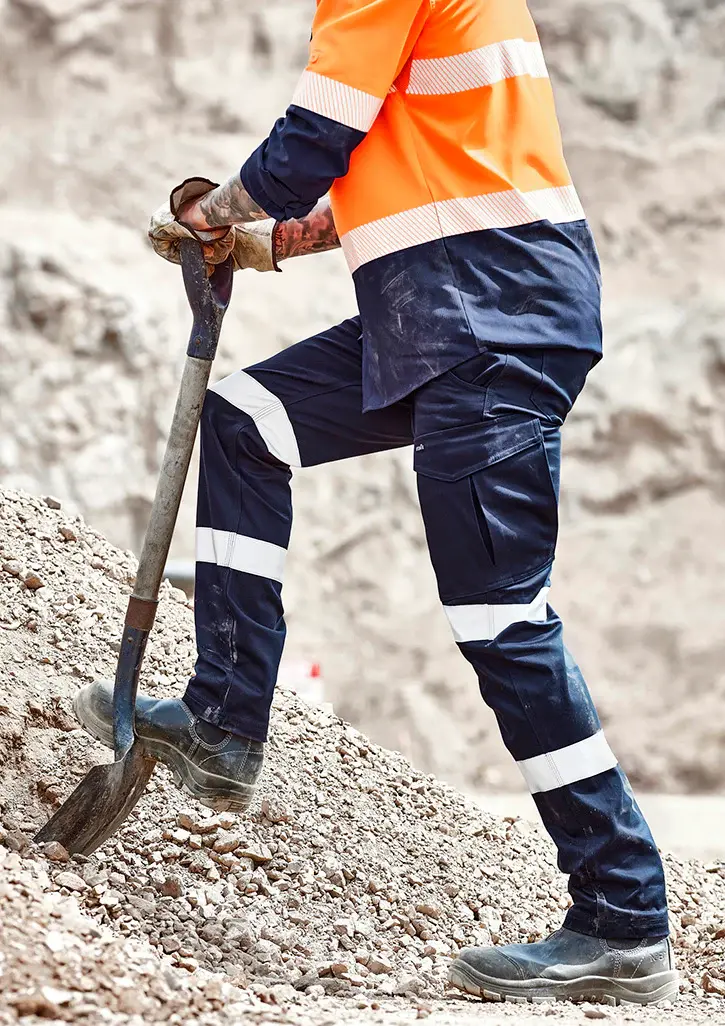
Getting visibility right across different environments
High-visibility workwear is essential in many industries, but it needs to match the actual working conditions.
That includes:
Choosing the right colours for the environment
Ensuring reflective elements are positioned effectively
Selecting garments suited to both day and night use
Visibility isn’t just about compliance. It’s about making sure people can be seen clearly in the conditions they’re working in.
Consistency across teams makes workwear easier to manage
When workwear varies from person to person or site to site, it creates small but noticeable friction.
Different colours, different fits and different standards can affect:
Team identity
Professional presentation
Ease of ordering and replacement
Perceived standards on site
A more consistent approach helps simplify decisions and creates a more cohesive look across your workforce.

Where branding fits into workwear
Branding often gets treated as a finishing touch, but it needs to be considered alongside the garment itself.
Embroidery and print methods should be suited to the fabric and the working conditions. If branding doesn’t hold up over time, it can quickly undermine the overall appearance of your team.
When done properly, branded workwear reinforces professionalism without compromising durability.
How to choose workwear that performs on site
Choosing workwear doesn’t need to be complicated, but it should be deliberate.
A practical approach usually includes:
Looking at how garments are actually used day to day
Involving the people who wear them in the decision
Prioritising comfort, durability and fit over short-term cost
Selecting options that can be rolled out consistently across teams
Choosing the right workwear for your team starts with understanding how it will actually be used on site.

Why workwear should be considered alongside safety
Workwear doesn’t exist in isolation. It plays a role in how people move, how visible they are, and how comfortably they can do their job.
When considered alongside PPE and site setup, it becomes part of a broader workwear and safety system that supports consistent performance across your operation.
Choosing workwear that holds up over time
The best workwear isn’t always the most expensive, and it’s rarely the most complicated.
It’s the gear that fits well, performs consistently and holds up under real conditions.
Across the workwear Australia market, there’s a wide range of options available, but the difference comes down to how well those options align with the realities of your site.
When those boxes are ticked, workwear stops being something people think about, and starts being something they rely on.
Choosing the right workwear Australia businesses can rely on
If you’re reviewing your current setup, it’s worth looking at how your workwear is performing on site, not just how it looks on paper.


Comments